In the Middle Ages, Latin and Arabic translations of ancient mystical texts known as the Corpus Hermeticum began to appear. These writings were attributed to Hermes Trismegistus (“Thrice Great Hermes”), a syncretisation of the Greek god Hermes and the Egyptian god Thoth. Composed in Hellenistic Egypt between the 2nd and 3rd centuries CE, the writings encompassed a wide range of esoteric knowledge, from philosophy and cosmology to alchemy, astronomy, medicine, and theology.
Originally written in Greek, these texts were initially preserved and transmitted through Neoplatonic and Gnostic traditions. In the 15th century, founders of Renaissance Neoplatonism Giovanni Pico della Mirandola (1463-94) and Marsilio Ficino (1433-99) translated the Greek manuscripts. This resurgence helped shape Renaissance humanism and laid the groundwork for later esoteric movements and occult practices.
This blog explores mystical dimensions of Hermetic philosophy, especially as they relate to myēsis (initiation), palingenesis (spiritual rebirth), and the experience of ecstasy. An introduction to how the Hermetic tradition conceives of human transformation as a total ontological shift, through which the soul becomes divine.
Mysticism and Ecstasy
Ecstasy is best understood and gains its significance in relation to mysticism, referring to a pivotal moment in a much broader philosophical and spiritual journey. Mysticism, deriving from the Greek verb mýo (to close, to initiate) refers to a hidden or secret form of knowledge that transcends the limits of ordinary perception. It is a state of being and knowing that opens the soul to dimensions beyond the rational, and yet, paradoxically, often grounded in disciplined, rational thought.
Mysticism is traditionally associated with a philosophical and ascetic path that may unfold independently or alongside ritualistic and devotional practices. Its purpose is the soul’s union with the Supreme Being, which is both male and female. This union may be achieved through reason, but more often through supra-rational experience: visions, revelations, contemplative silence, or moments of inner transformation that defy verbal explanation. Ecstasy plays a central role in this process as the condition in which the soul momentarily steps outside of itself to encounter the Divine. But mysticism expresses a broader spiritual, devotional and ethical path, that may exist independently or accompany certain ritual practices.
The path of the mystic includes many stages: longing for God, purification, union with God, return to everyday life, and structuring one’s life according to the influence of the ecstatic experience.
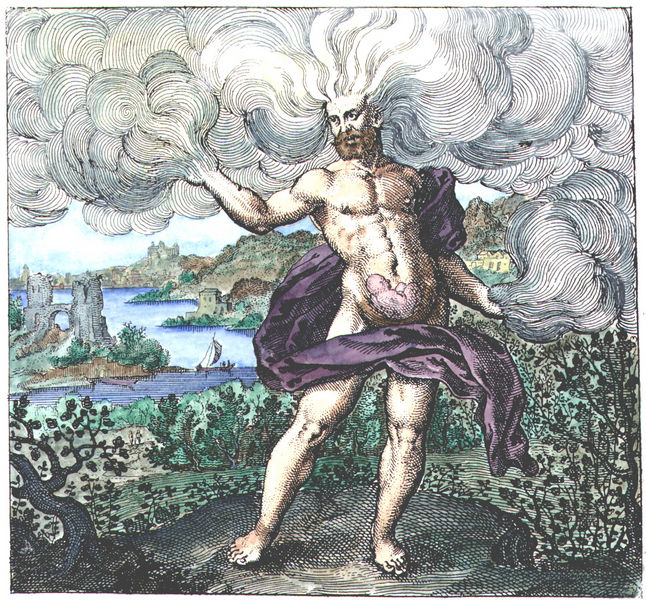
Alchemical illustration by Matthias Merian from Atlanta Fugiens by Michael Maier, published by Johan Theodor de Bay in Oppenheim, 1617. Depicts a passage from the Emerald Tablet: ‘the Wind has carried it in its belly, its nurse is the Earth.’
Myēsis, Rebirth, Hymnodia
Μύησις (initiation) is a divine grace that comes after the intense desire of the initiate. In Corpus Hermeticum (c. 100-c. 300 CE), Hermes Trismegistus speaks of the process of spiritual rebirth:
“The womb is silence, the seed is the true good, the sower is the will of God, and the fruit is the deified mystic.”
Rebirth, or Palingenesia, is an inward, radical shift in being. The newborn is internally transformed into a true child of God, having received the divine “seed” of truth, cultivated in the womb of inner stillness and contemplation. The initiate is deified their nature fundamentally altered through union with the Good, which in Hermetic tradition is synonymous with God. It is not only a knowledge of God that is attained, but a complete assimilation into God’s nature.
The suspension of bodily functions is a necessary condition for the true knowledge of the divine and is mentioned by most mystics. Hermetic texts describe what might be called a first form of ecstasy: the departure of the soul from its material shell. The purification of the rational soul or Νους (Mind) corresponds to its ascent to the Divine Beings of the eighth and highest sphere (Ogdoad). This gradual unfolding translates as a movement through celestial spheres in which the soul sheds the layers of illusion and passion that bind it to the world. The higher the soul ascends, the more it sheds the bodily wrappings alien to it. Thus, it arrives completely naked at the Ogdoad, where it rediscovers its primordial and true essence.
A Chaldean Oracle that describes the psychanodia (the soul’s ascent) states that, as souls rise toward the heavens, they sing a paean:
“διὸ καὶ τὸ λόγιόν φήσι, τὰς ψυχὰς ἀναγομένας τὸν παιᾶνα ᾄδειν.” “Thus, the oracle says: as the souls ascend, they sing a paean.”
Some scholars interpret the hymn as a reflection of astral harmony that accompanies the soul’s passage through the cosmos. Others, like French philosopher André-Jean Festugière, suggest a more human interpretation: that hymnody is a natural consequence of inner joy, moral harmony and the ideal way of life. He identifies similar hymns in ancient Greek tradition which are not connected to any astrological interpretation.
As a response, the blessed ones of the Ogdoad offer a joyful welcome to the newly arrived mind: “Those present rejoice at his arrival.” The joy is twofold, for the “present ones” because a new being has joined their company; and for the mind itself because it enters into communion with the gods.
Therefore my mind wants to sing a hymn to you daily. I am the instrument of thy spirit; Mind is thy plectrum. And thy counsel plucks me. I see myself! I have received power from thee. For thy love has reached us.
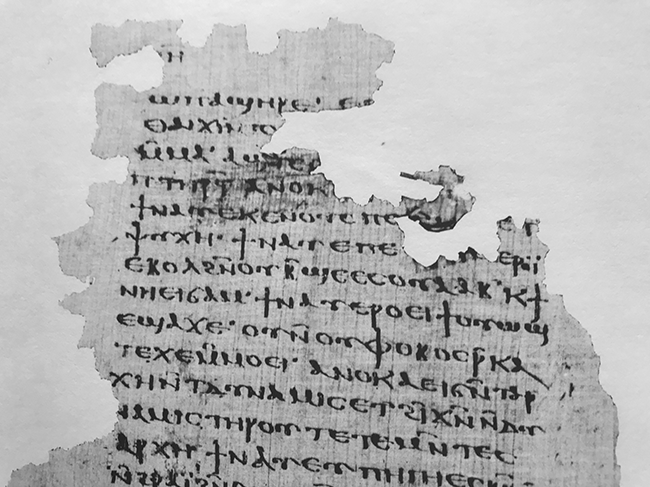
Discourse VIII–IX NHC VI,6 60.27–61.2.
Hermes Trismegistus, floor mosaic in the Cathedral of Siena.
Neoplatonism onRebirth
It is curious that in Corpus Hermeticum the rediscovery of the true self is considered an ecstatic state. While this may be justified in the case of a metaphysical experience, where the soul truly departs from the material world and ascends to heaven, it seems contradictory when it comes to the mystical experience of Palingenesia, in which the soul undergoes the various stages of perfection morally and internally. Perhaps it would be more appropriate to speak of in-stasis rather than ec-stasis, since the initiate finds themselves through interiorization and contemplation. This kind of contemplation was already taking place in the preparation for Myesis (“abolish the senses of the body”).
All the mystical writers of the time refer to this, especially culminating with the Neoplatonic philosophers, who crystallised the process of in-stasis by integrating it into their cosmological worldview. The initiate does not flee from the self, but sinks deeply into it, toward an essence that had always been present, though hidden.
According to Neoplatonism, the soul preexists in heaven as a simple essence. Upon falling into the material world, it does not completely lose its original self but retains something of it, which Plotinus calls a trace. Through mysticism, the human being manages to free themselves from the influence of the external sensory image and to activate, deep within their mortal existence, the primordial and authentic self. This activation of the inner self is also described by the Neoplatonists as ecstasy, because it constitutes a sudden and deeply overwhelming experience that places the mind psychologically and spiritually outside itself. However, in this sense, the term ecstasy is used more metaphorically than literally.
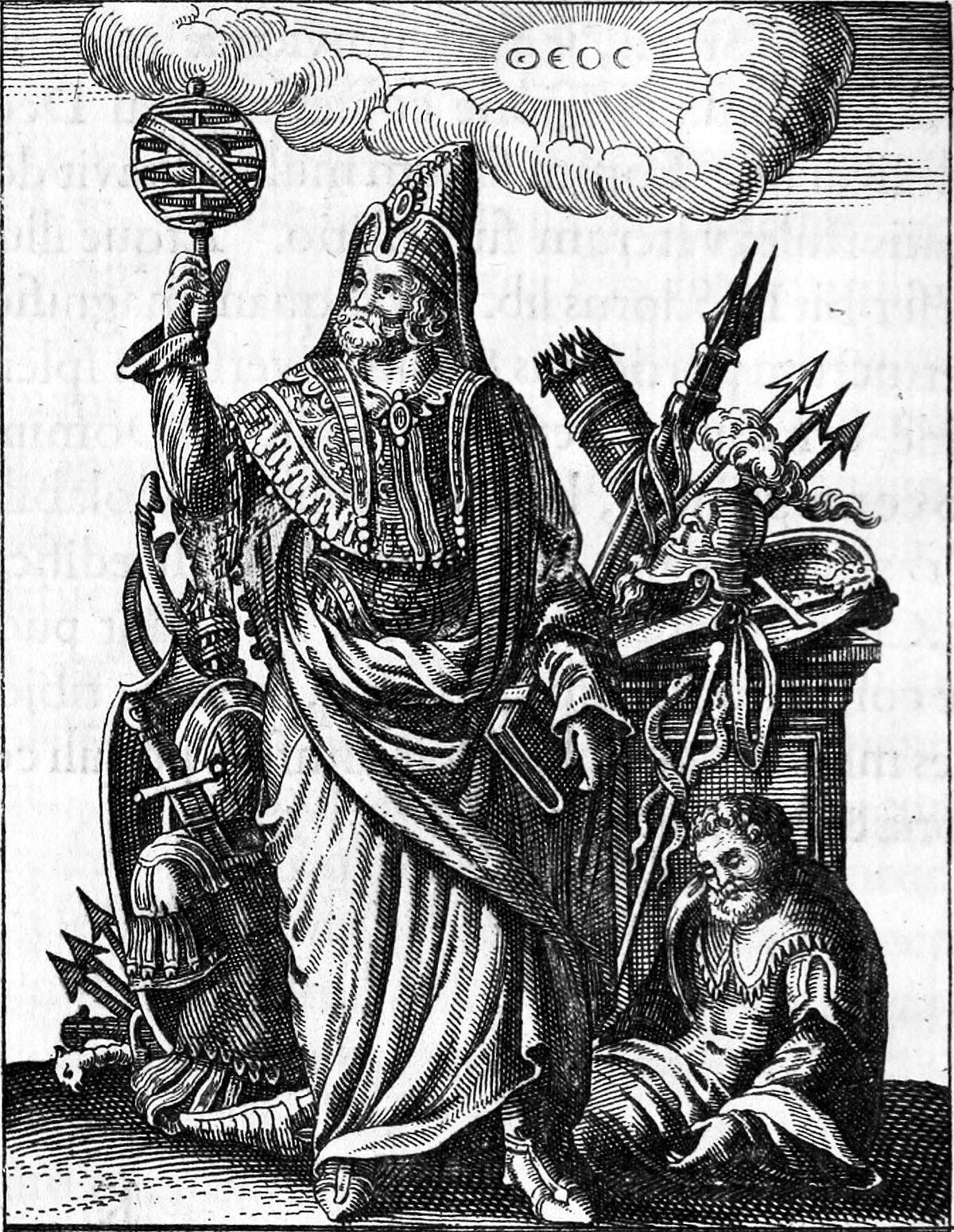
Mercurius Trismegistus, copper engraving by Johan Theodor de Bay for the Tractatus posthumus de divinatione & magicis præstigiis by Jean-Jacques Boissard, Oppenheim, National Library of Spain, 1615.
Myēsis in Corpus Hermeticus
In Discourse XIII, Hermes Trismegistus attempts to describe the his own mystical experience, when he himself was initiated into Palingenesia:
“Seeing in myself a vision not shaped by the imagination, a vision born from the mercy of God, I left my former self behind. I became a divine body, and now I am no longer the man I was – I have been born in mind.”
He then wishes the exact same fate upon his disciple Tat:
“Would that you, my child, might leave yourself behind, like those who dream while awake.”
As the mystic ascends through the levels of the cosmos, he eventually attains a vision of the All – a state in which spatial and temporal boundaries dissolve. Tat, upon his own initiation, expresses his realization through an extraordinary affirmation of omnipresence:
“I am in heaven, on earth, in water, in air; I am in animals, in plants; in the womb, before the womb, after the womb—I am everywhere.”
The mystic is present everywhere, liberated from both spatial and temporal limitations. His presence inhabits all things, all elements, all phases of being, transcending birth and death. In other words, he becomes eternal.
This metaphysical omnipresence becomes a lived mystical reality. Νους (Mind) reveals to Hermes the path toward knowing the Divine:
“Think of God in this way: as holding all thoughts within Himself – the world, Himself, the All. If, then, you do not make yourself equal to God, you will not be able to know Him; for like is known only by like.”
Myēsis is the experience of an ontological transformation: to know God, one must become like God. This reiterates the classical doctrine of knowledge through similarity, which originates in Plato. The text continues:
“Grow yourself to the immeasurable magnitude, leap out of all body, surpass all time, become Eternity – and you will know God.”
The mystical state of Myēsis is best understood through the concept of ecstasy: an existential stretching beyond the self, a journey that culminates in union with the Divine.. This “growing”, or rather expanding, involves a total identification with the cosmos. The method is described in detail: The mystic must ascend above all heights, descend lower than all depths, and experience the sensations of the four elements, finding himself simultaneously everywhere: on earth, in the sea, in heaven. As for the temporal dimension, the mystic must feel at once: that he has not yet been born, that he is in the womb, that he is young, old, dead, and also living in the afterlife.
“As you walk this path, He will meet you everywhere and be seen everywhere, where and when you do not expect: awake, asleep, sailing, walking, by night, by day, speaking, silent – for there is nothing where He is not.”
The Divine becomes omnipresent because the mystic has become omnipresent. This is the culmination of the ascent, the point at which the Nous is no longer separate from the Divine Mind. In Discourse XIII, this final stage of Myēsis was symbolised by a mystical hymn, which Nous hears as it ascends with the beings of the Ogdoad and is ultimately welcomed by Divine Beings. That hymn marked the soul’s entry into the divine world.
.
.
Bibliography
Ioannis Karakostanoglou, Η νομική υπόσταση των διεθνών επεμβάσεων για την προστασία των ανθρωπίνων δικαιωμάτων [The legal status of international interventions for the protection of human rights] (PhD diss., Aristotle University of Thessaloniki, 1989).
Liz Williams, Compendium of the Occult: Arcane Artefacts, Magic Rituals and Sacred Symbolism (London: Thames & Hudson, 2023),
Roelof van den Broek, “The Discourse on the Eighth and the Ninth (NHC VI,6), the Prayer of Thanksgiving (NHC VI,7), and the Asclepius (NHC VI,8): Hermetic Texts in Nag Hammadi and Their Bipartite Theology,”Gnosis: Journal of Gnostic Studies 7, no. 1 (2022): 3–33.



 Sibil•la Ensemble
Leave a comment